Plan ahead Openers · Bond Head
Smart Garage Controller Setup in Bond Head
One remote lives in a car you sold last spring. The other needs three presses from the driveway and its battery cover is taped on.
Call now · open 24/7(289) 831-1529In plain words
A door you can close from across town is a door you cannot see, and the operator standard treats that seriously. Any command sent from out of sight must be preceded by a warning: the controller sounds a beeper and flashes a light for several seconds before the door moves, and the door must have working photo eyes at the floor. The setup visit confirms both. The technician checks the sensors, tests the remote close so you hear it yourself, and runs the door onto a 2x4 to prove it reverses on contact. Convenience is added on top of those two safety behaviours, not in place of them.
How the visit goesIt is February. You come down in the morning and the garage door has stood open all night; the car is frosted inside, the furnace has run without a pause, and the pipe in the shared wall is your first worry. Nobody knew, because nothing told anyone.
Smart Garage Controller Setup · Bond Head
How the visit goes
- 1
Signal strength at the ceiling
The hub will live beside the motor, so that is where wireless coverage is measured, not at the kitchen counter. The technician checks signal on the 2.4 GHz band, which most controllers use for its range, and notes how many walls, a floor and possibly an insulated steel door stand between the router and the garage. A detached garage across a driveway, a router tucked in a basement corner, or metal cladding on the garage wall all show up in this reading. Where the signal is marginal the plan includes a small access point or extender placed partway, because a hub that drops offline each week is not a working installation.
- 2
Taking over a controller left by a previous owner
When the house came with a hub or a connected opener still tied to the seller's account, the device is first removed from that account if the seller can be reached, and otherwise reset to factory settings using the maker's documented procedure. The hub or opener is then paired fresh, joined to your network and claimed under your new login. Any sensor already on the door is checked for battery and placement and re-paired rather than assumed to be working. The old account is cut off from the door for good, and the history you see from then on starts with your household.
- 3
Ready for the cold months
An installation done for this climate leaves you set for winter. The sensor is screwed rather than stuck on, its cell is a type built to withstand the cold, and the left-open alert is set so a door left up on a freezing night reaches your phone before the garage has lost its heat. Keep snow and ice cleared from the threshold and the photo-eye lenses, since a blocked beam pauses remote closing until it is cleared, and expect the door to be a shade slower on the coldest mornings. If the app reports the door open when it is plainly shut after a hard frost, the sensor mount is the first thing to check.
In the van
- Dry-contact adapter for encrypted openers
- Plug-in power adapter
- Receptacle splitter with approval mark
- A 2x4 offcut for the reversal test
- Low-voltage bell wire
What affects the quote
- 1
Cellular backup if the home Wi-Fi goes down
A hub that only works over Wi-Fi stops reporting the moment the internet drops, which matters most during a storm. A cellular backup module keeps alerts and remote closing working through an outage, and whether one is added is decided once the household's connectivity is reviewed.
- 2
Door sensor mounting
A flat steel panel takes the sensor in minutes. An insulated, raised-panel or windowed top section may need a bracket or a different spot, which adds a little time.
- 3
Taking over an existing device
Releasing a controller from a previous owner's account, resetting it and pairing it fresh takes time that a new device does not, and its sensor may need a battery or repositioning.
Same fees day, night or weekend.
Smart Garage Controller Setup: questions
Will my existing remotes and keypad still work?
Yes. The controller adds a new way to give the opener the same command; it sits alongside the ones you already have. Wall console, remotes and outdoor keypad keep working exactly as before, and each is tested at the end of the visit. If a remote has been failing for reasons of its own, a flat battery or a worn button, that is a separate small fix the technician can do while there.
What batteries does the sensor take, and how long do they last in a cold garage?
Most sensors take a coin cell or a pair of small cylindrical cells, specified by the maker. In a heated garage a battery commonly lasts a year or two; in an unheated one, expect less, and choose a lithium cell over alkaline because it holds its voltage in the cold. The app warns you as the battery runs down, and replacing it takes a moment and a fresh cell.
What does the colour of the learn button tell you?
On many openers the learn button's colour marks the generation of radio coding the unit uses, which decides how a hub can talk to it. Some generations accept a simple two-wire connection at the wall-control terminals; others use an encrypted console and need the hub paired by radio or through a small adapter. Sending a photo of the button and the label ahead of the visit lets the technician arrive with the right hardware.
Openers & Access
Bigger photo, sooner job: Emergency Book soon Plan ahead
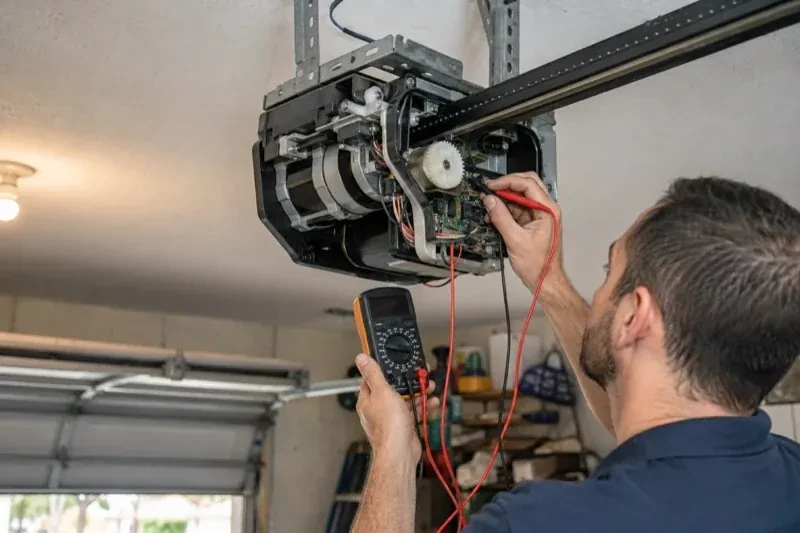 Book soonGarage Door Opener Diagnosis and RepairThe door stops partway up for no reason, or opens fine and then refuses the next time.
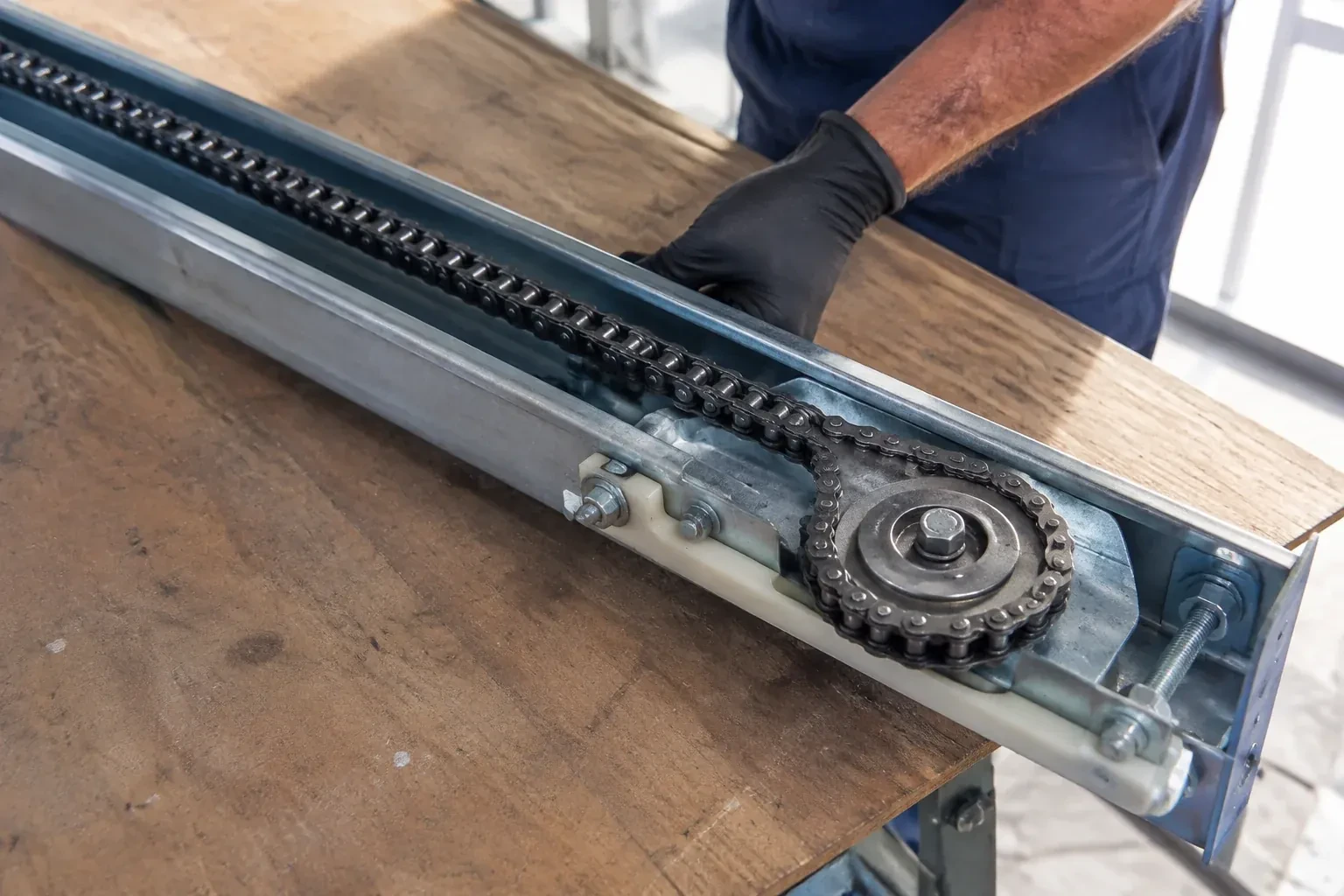 Book soonChain-Drive Opener RepairHalfway up, the door lurches.
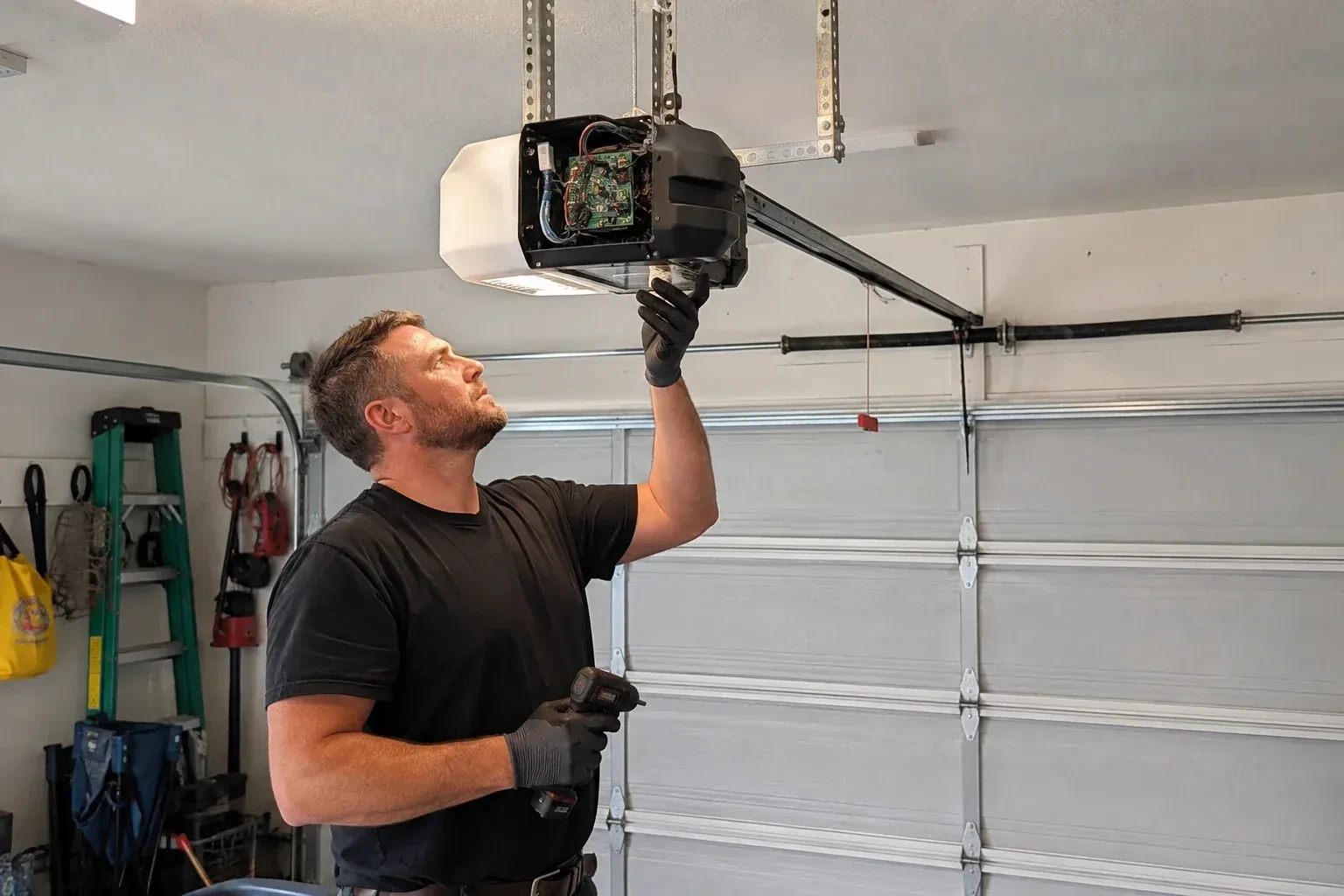 Book soonBelt-Drive Opener RepairPress the remote and the motor runs its full cycle, lights on, the usual whir, but the door does not move a centimetre.
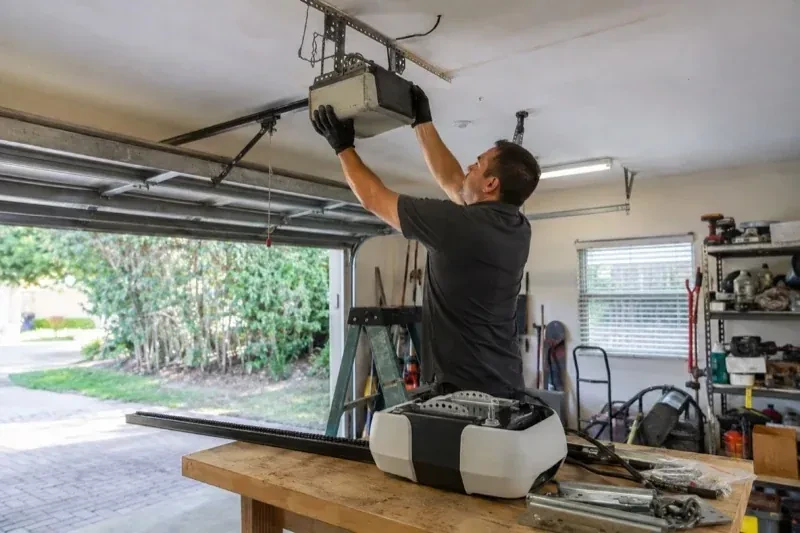 Plan aheadGarage Door Opener Replacement
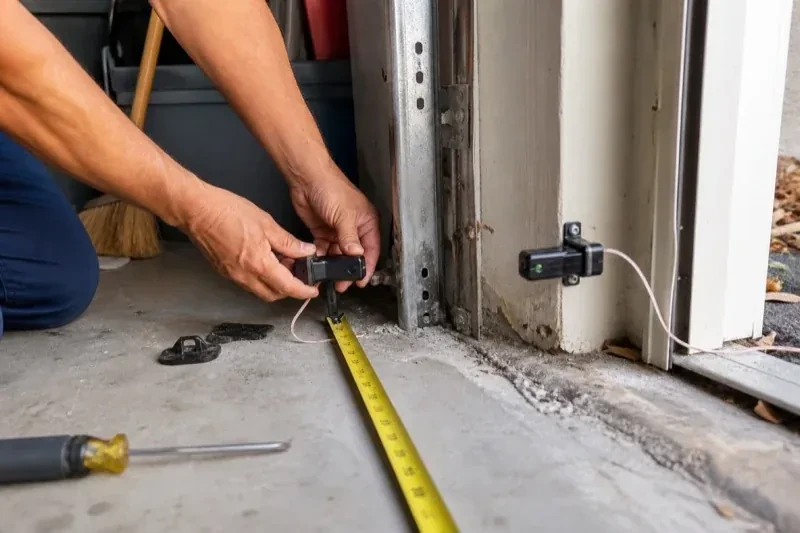 Book soonPhoto-Eye Sensor Alignment or ReplacementThe small light on one of the sensors near the floor has gone dark, or it flickers when someone walks past the track.
Smart Garage Controller Setup near you
Simcoe, Ontario
Bond Head information
- Town
- Bond Head, Simcoe, Ontario
- In business
- 12 years
- Hours
- Open 24/7 · nights, weekends and holidays, same fees
- Phone
- (289) 831-1529
- Visits
- On-site assessment preferred. Request a visit or call.
What the census means at the door
24%
Newer homes. About 24% of homes in Bradford West Gwillimbury were built in 1980 or earlier, according to the 2021 Census.
Openers in newer homes usually already have photo-eyes and rolling-code remotes, so the common work is settings rather than upgrades: adjusting force and travel limits, replacing a worn gear or logic board, and adding a keypad, a second remote or a phone controller.
75%
Mostly houses. Single-detached houses make up about 75% of homes in Bradford West Gwillimbury (2021 Census).
Households in detached homes often have several remotes, a keypad and a phone app between family members and their cars. We keep all of them programmed to the opener, replace the ones that have failed, and explain how to add a new one when a car changes hands.
Open 24/7
Request a visit
One remote lives in a car you sold last spring.
Call now · open 24/7(289) 831-1529- On-site assessment preferred
- Same fees day, night or weekend
- 12 years in business